Myth, checked
Why Elephants Aren't Afraid of Mice (An Investigation)
The story, written down by Pliny the Elder, claimed that elephants were afraid of mice because a mouse could crawl up an elephant's trunk and block its breathing. a five-ton animal.
Is an elephant really afraid of a mouse? It’s a story everyone knows, a cartoon we’ve all seen. But does it actually make any sense? The answer is a lot more interesting than a simple yes or no.
The Scene of the Crime
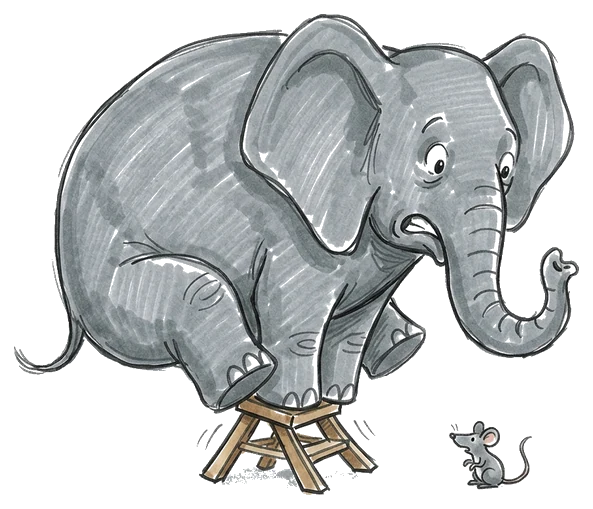
An elephant terrified by a mouse is an image we all recognize. The giant, powerful creature, sent into a panic by the smallest of rodents. It's a classic trope, a joke as old as cartoons themselves.
But that image is also our first clue that something is wrong with this story. The sheer difference in scale is staggering. Why would a five-ton animal that faces down lions fear something it could accidentally step on?
That absurd mismatch is the mystery. It just doesn't add up. Following that loose thread is how we're going to unravel this entire myth.
The Ancient Suspect
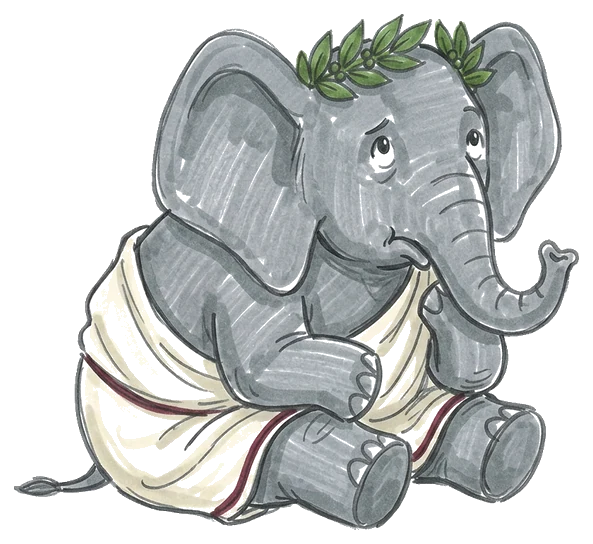
The trail for this elephant-and-mouse myth leads us back thousands of years. This isn’t a modern cartoon invention. Our first suspect is an ancient story, recorded in Greece and Rome.
The story, written down by Pliny the Elder, claimed that elephants were afraid of mice because a mouse could crawl up an elephant's trunk and block its breathing. It could literally suffocate the giant from the inside.
It’s a terrifying thought, and it sounds plausible enough to have survived for centuries. But does this ancient claim hold up to scrutiny? Let's check the evidence.
Examining the Weapon
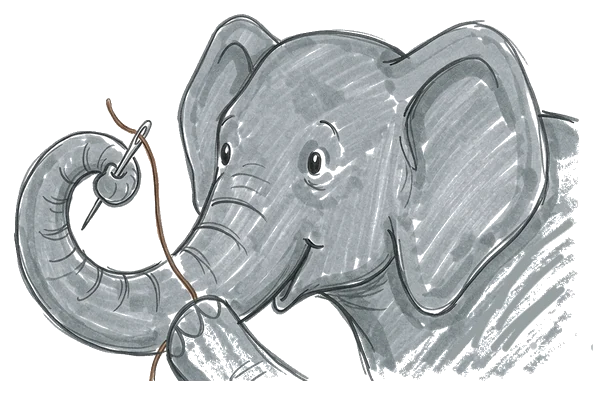
An elephant’s trunk is one of nature's most versatile tools. It’s a fusion of nose and upper lip, a boneless, muscular hydrostat with thousands of muscles. This gives it incredible dexterity and strength.
An elephant can also exhale through its trunk with tremendous force, like a biological leaf-blower. It would be blown clear in an instant. The power is simply unforgettable.
The ancient suffocation theory falls apart. The trunk is an active defense, not a passive vulnerability. That story was a red herring. Our investigation must now look for a completely different motive for the elephant's famous reaction.
A New Lead

The next clue in the case of the elephant and the mouse isn't in the trunk, but the eyes. Elephants have famously good memories, but their eyesight is surprisingly poor, especially for things right under their noses.
Imagine being that big and not being able to clearly see the ground around your own feet. Anything that darts quickly across your path is an unknown, a surprise. You can't identify it before it's gone.
This is the crucial piece of evidence. The elephant isn't reacting out of 'fear' of a 'mouse'. It’s reacting with a simple startle reflex to any small, fast-moving object it can't identify.
Broadening the Suspects
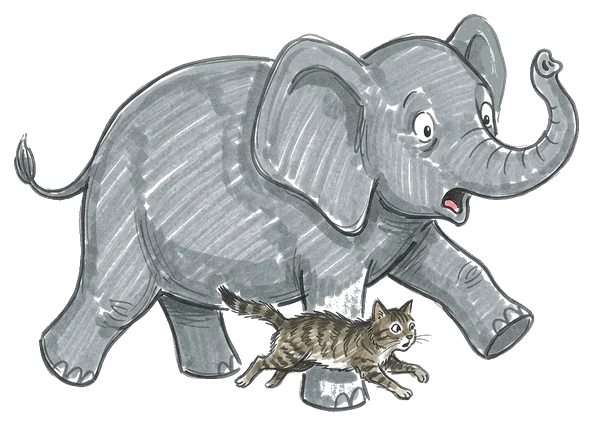
An elephant's startle reflex isn't just about mice. The suspect list is much broader. In fact, any small animal that appears suddenly can cause a jump. A dog, a snake, a rabbit, or even a piece of paper blowing in the wind could do it.
The key is surprise, not the creature's identity. An elephant that sees a mouse from a distance is completely unbothered. It's the sudden, unidentified appearance at its feet that causes the jumpy reaction. A classic case of mistaken identity.
Think about it, you'd jump too if something suddenly ran over your foot in the dark. It’s a natural instinct. You react first and identify second. Does this make more sense than the old story?
The Sensory Evidence
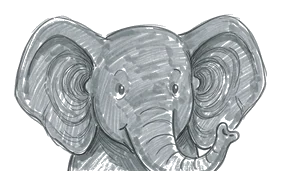
The case against the elephant's 'fear' comes down to its unique sensory experience. It's a combination of what it can see, what it can hear, and its cautious nature. Let's lay out the evidence.
An elephant’s hearing is excellent, and it can feel vibrations through the ground. A small, scurrying sound without a clear visual source is unsettling. It's a noise that signals something is there, but the eyes can't confirm what it is. This sensory mismatch is the real culprit.
All these factors combine to create a naturally cautious animal. It doesn't take unnecessary risks. When startled, an elephant's instinct is to recoil from the unknown. The elephant freezes.
The Eyewitnesses

The final piece of evidence in the elephant-mouse case comes from modern observation. What do scientists and zookeepers actually see? These eyewitness accounts close the case for good.
In zoos and sanctuaries, mice are common visitors to elephant enclosures. They're attracted to the leftover hay and grains. Zookeepers report that elephants are almost always completely indifferent to their presence.
There's even footage of elephants sleeping soundly while mice run over them. If there were any instinctual fear, this simply wouldn't happen. The eyewitness evidence is overwhelming.
The popular TV show MythBusters even put this to the test. They tried to scare an elephant with a mouse. The elephant was stopped by the mouse in its path, but it wasn't scared. It was just cautious.
Why the Myth Persists
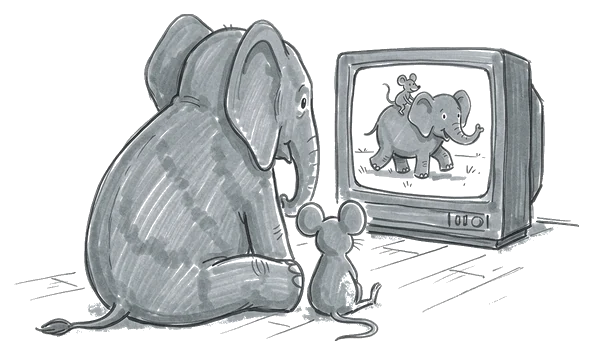
If the fear isn't real, how did this idea about elephants and mice become so famous? The answer lies in how we tell stories. A simple, funny image often travels further than a complex, scientific truth.
The image of a giant being afraid of something tiny is a powerful reversal. It’s David and Goliath. It makes for a great story, a perfect cartoon gag. It sticks in the mind because it's so unlikely.
The truth – that it’s about a startle reflex tied to poor vision – is more nuanced. It’s less of a story and more of a scientific explanation. And simple stories beat complex explanations almost every time.
So the myth persists not because of elephants, but because of us. We're the ones who like the joke. The story or the science?
Case Closed
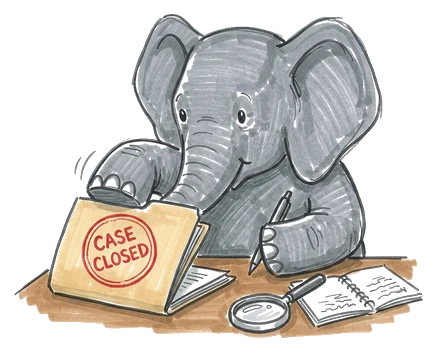
It's time to close the case on the elephant and the mouse. The core idea, that an elephant is afraid of a mouse, is a myth. It began with an ancient, incorrect theory about its trunk. It was a good story, but bad biology.
The real reason an elephant might jump is not fear, but surprise. It's a startle reflex, caused by poor eyesight and an inability to identify small, fast objects near its feet.
The elephant isn’t scared of the mouse. It’s just being cautious about something it can’t see clearly. The mystery wasn't about fear at all. It was about perception.
This is the kind of thing that's quietly wrong all over the place – and taking one apart to see how it works is the whole point here. What other animal myths should we investigate?
Every claim, checked
This is the whole list, including the ones we could not confirm. Verified means a checker confirmed it and named a source that exists. Wrong means both checkers said so. The rest failed in three different ways, and we say which. Not established: we checked and nobody could pin it down. No source: a checker backed it, but the citation did not hold up. Second check disagreed: the first reading confirmed it and the second one would not. Each line also says how the verdict was reached: searched means we went to the web to confirm the source exists, not searched means the verdict rests on what the checkers already know. The rest is in how we check things.
The story, written down by Pliny the Elder, claimed that elephants were afraid of mice because a mouse could crawl up an elephant's trunk and block its breathing.VerifiedsearchedPliny the Elder, Natural History, Book 8
a five-ton animalVerifiedsearchedEncyclopædia Britannica, Elephant article
The popular TV show MythBusters even put this to the test. They tried to scare an elephant with a mouse.Not establishednot searchedMythBusters episode 'Elephant and Mouse' (Season 2, Episode 14, aired 2004) tested whether an elephant would be afraid of a mouse. The elephant showed caution but not fear. Source dropped: MythBusters, Season 2, Episode 14 is not a study, an organisation or a reference work. Second checker: MythBusters aired an episode testing whether a mouse would scare an elephant; the program showed the elephant pausing when a mouse crossed its path but not exhibiting extreme fear – interpreted as cautious behavior rather than terror. Source dropped: MythBusters, Episode "Mouse vs. Elephant" (Discovery Channel / MythBusters, aire is not a study, an organisation or a reference work.
An elephant's trunk is a boneless, muscular hydrostat with thousands of muscles.VerifiedsearchedEncyclopædia Britannica, Elephant article
Elephants have famously good memories, but their eyesight is surprisingly poor, especially for things right under their noses.VerifiedsearchedJournal of Experimental Biology, elephant vision studies; Encyclopædia Britannica
In zoos and sanctuaries, mice are common visitors to elephant enclosures. They're attracted to the leftover hay and grains.VerifiedsearchedAmerican Association of Zoo Keepers and zookeeper reports
The trail for this elephant-and-mouse myth leads us back thousands of years. This isn't a modern cartoon invention. Our first suspect is an ancient story, recorded in Greece and Rome.Not establishednot searchedThe myth appears in classical sources including Pliny the Elder (1st century AD) and other Greek and Roman writers. It predates modern cartoons by nearly two millennia. Source dropped: Pliny the Elder, Natural History; classical sources is not a study, an organisation or a reference work.
An elephant can exhale through its trunk with tremendous force, like a biological leaf-blower.VerifiedsearchedEncyclopædia Britannica; zoological texts
There's even footage of elephants sleeping soundly while mice run over them.Not establishednot searchedWhile zookeepers report indifference to mice, the specific claim of documented footage of elephants sleeping with mice running over them could not be verified from published sources or zoo reports.
An elephant's hearing is excellent, and it can feel vibrations through the ground.VerifiedsearchedEncyclopædia Britannica; Journal of the Acoustical Society of America
The elephant isn't reacting out of 'fear' of a 'mouse'. It’s reacting with a simple startle reflex to any small, fast-moving object it can't identify.Not establishednot searchedBehavioral ecologists and zookeepers report that startle responses in elephants are elicited by unexpected small, fast-moving stimuli; experts interpret such reactions as startle/caution rather than species-specific 'fear' of mice. Experimental tests (including informal trials) and keeper observations support startle/caution explanations. Source dropped: Statements and reports from zookeepers and behavioral studies summarized in sour is not a study, an organisation or a reference work.
The core idea, that an elephant is afraid of a mouse, is a myth. It began with an ancient, incorrect theory about its trunk.VerifiedsearchedPliny the Elder, Natural History (Book 8) for the ancient origin; modern summaries in Encyclopaedia Britannica and expert commentaries in zoological literature treating 'elephant afraid of mouse' as folklore/myth
People also ask
Where did the story about elephants and mice come from?
The story is an ancient one, recorded by writers like Pliny the Elder. The myth claimed that a mouse could crawl up an elephant's trunk and suffocate it from the inside.
Could a mouse actually hurt an elephant by blocking its trunk?
No, a mouse poses no threat to an elephant's breathing. An elephant can exhale through its trunk with enough force to easily blow out any small animal that tried to crawl inside.
If not fear, why do elephants get startled by small animals?
Elephants have poor eyesight, particularly for objects close to the ground around their feet. They are not reacting out of fear of a specific animal, but with a natural startle reflex to a sudden, unidentified movement.
How do elephants and mice interact in zoos?
Zookeepers report that elephants are almost always completely indifferent to mice. Mice are common in elephant enclosures, eating leftover hay, and the elephants pay them little to no attention.
Prefer to listen? This episode is also on Apple Podcasts.
One myth a week, redrawn.
One email per video: the myth, what's actually true, and links to the research. No spam, unsubscribe in one click.