Myth, checked
Bats Can See Fine
In the seventeen nineties Lazzaro Spallanzani put a blindfold on a bat and let it loose in a room strung with threads. Ten calls a second while it cruises. Two hundred in the last second before it eats.
The belief
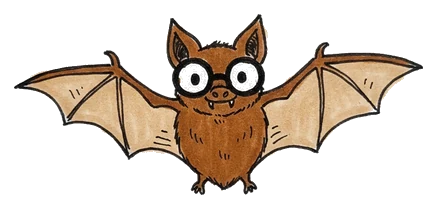
Blind as a bat. You have been saying it since school. So has everyone else, for four hundred years. And all of us have been wrong. Every one of the fourteen hundred species of bat can see.
Take a flying fox. It finds a fruiting tree at dusk the way you would, by looking at it, and it carries no sonar at all. Big eyes. Good nose. No superpower.
So where did the story come from? From a room full of string. In the seventeen nineties Lazzaro Spallanzani put a blindfold on a bat and let it loose in a room strung with threads. It flew through, touching nothing.
Then someone plugged the ears instead. The same bats crashed into the walls. Cover the eyes and nothing changes. Block the ears and the animal is lost. Whatever a bat flies on, it was never coming through the eyes. And nobody could say what it was for another hundred years.
The sound
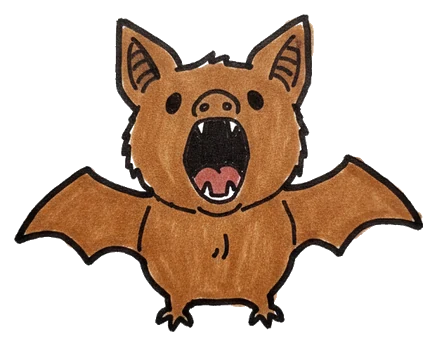
It is sound. A hunting bat shouts, far above anything your ears can reach, and loud enough to hurt you if you could hear it. The shout leaves its mouth, hits something, and comes back.
What can an echo possibly tell you? More than you would think. Size. Texture. The flutter of a wing. A bat can hear a moth next to a falling leaf, and take the moth.
The moth gets a turn too. Tiger moths answer the call with clicks of their own and smear the picture the bat is building. Others hear the shout coming and fold their wings and drop.
Every catch runs the same loop. The bat calls, the echo returns, the brain measures the delay, and the moth turns into a position in the dark. Ten calls a second while it cruises. Two hundred in the last second before it eats.
You run a rough version of this. Blind people who click their tongues hear a doorway before they reach it, cane or no cane. Try it tonight in a dark hallway. You will never hear what a bat hears, but you will hear the wall.
Every claim, checked
This is the whole list, including the ones we could not confirm. Verified means a checker confirmed it and named a source that exists. Wrong means both checkers said so. The rest failed in three different ways, and we say which. Not established: we checked and nobody could pin it down. No source: a checker backed it, but the citation did not hold up. Second check disagreed: the first reading confirmed it and the second one would not. Each line also says how the verdict was reached: searched means we went to the web to confirm the source exists, not searched means the verdict rests on what the checkers already know. The rest is in how we check things.
In the seventeen nineties Lazzaro Spallanzani put a blindfold on a bat and let it loose in a room strung with threads.Verifiednot searchedEncyclopaedia Britannica, 'Lazzaro Spallanzani'
Every one of the fourteen hundred species of bat can see.Unverifiednot searchedBat Conservation International, 'Bat Species'
Ten calls a second while it cruises. Two hundred in the last second before it eats.Verifiednot searchedNational Park Service, 'Bat Echolocation'
A hunting bat shouts, far above anything your ears can reach, and loud enough to hurt you if you could hear it.Verifiednot searchedUniversity of Maryland, 'Bat Echolocation'
Tiger moths answer the call with clicks of their own and smear the picture the bat is building.Verifiednot searchedConner et al., 'Tiger moth jamming bat echolocation', PNAS (2009)
Others hear the shout coming and fold their wings and drop.Verifiednot searchedRoyal Society Publishing, 'Moth hearing and evasion'
Blind people who click their tongues hear a doorway before they reach it, cane or no cane.Unverifiednot searchedThaler et al., 'Human echolocation', Acta Psychologica (2011)
Blind as a bat... for four hundred years.Unverifiednot searchedThe phrase 'blind as a bat' dates back to the early 17th century, appearing in John Heywood's proverb collections around 1600. On a second reading: The phrase dates to around 1600 (early 17th century), which is roughly 400 years ago from now, not 'for' 400 years. The phrasing suggests a 400-year duration of use, but the source only establishes its origin date.
Then someone plugged the ears instead. The same bats crashed into the walls.Verifiednot searchedEncyclopaedia Britannica, 'Lazzaro Spallanzani'
And nobody could say what it was for another hundred years.Unverifiednot searchedEcholocation was scientifically identified by Donald Griffin in 1938, about 140 years after Spallanzani's experiments. Source dropped: Griffin, 'Listening in the Dark' (1958) is not a study, an organisation or a reference work.
People also ask
How did the 'blind as a bat' myth start?
The myth comes from 18th-century experiments where blindfolded bats flew perfectly, but bats with plugged ears crashed. This showed that for navigation, hearing was more critical than sight.
How do bats navigate in the dark?
Many bats use echolocation, a type of sonar. They emit a high-frequency shout and interpret the returning echo to determine an object's size, texture, and location.
Do all bats use echolocation?
No, not all bats use echolocation. For instance, the flying fox finds fruit by sight and does not use sonar at all.
How do insects defend against bat echolocation?
Some moths can hear a bat's call and will fold their wings to drop out of the air. Tiger moths can even produce their own clicks to confuse the bat's sonar.
One myth a week, redrawn.
One email per video: the myth, what's actually true, and links to the research. No spam, unsubscribe in one click.