Myth, checked
Cats Don't Always Land on Their Feet. Vets See the Broken Teeth.
cats reach terminal velocity during falls from very tall buildings. a cat's inner ear acts as a personal gyroscope telling it which way is down.
The Experiment

Can a cat really always land on its feet? It’s a piece of common knowledge, something everyone just knows. We accept it as a kind of small, everyday magic. But we're going to run the experiment, right here.
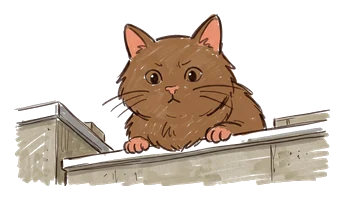
The legend says that no matter how a cat falls, it will twist in mid-air and stick a perfect four-point landing. A built-in superpower. Let's meet our test subject: one perfectly ordinary, fluffy house cat.
To test this properly, we can't just drop our cat once. The height is everything. So we’ll do three drops: short, medium, and very high.
Every cat is supposed to land on its feet, every time. So for our first test, let's try a very short drop. Imagine holding a cat and losing your grip just a foot or two off the ground. What happens?
The Short Fall

A cat dropped from just a foot or two lands badly. With a thump. It hits the floor on its side or back, looking surprised and a little undignified. The cat simply doesn't have time to orient itself. So much for 'always'.
This is our first, crucial clue. The cat’s ability isn’t magic. It's a physical action that takes time. The reflex needs a moment to kick in. That tiny delay makes all the difference.
A short fall didn't give the cat time to react. So for our second test, let's give it that time. We'll drop our cat from about six feet. This is the 'just right' height, the goldilocks zone for falling felines.
The Perfect Turn

As soon as it's falling, its inner ear–its personal gyroscope–tells it which way is down. Instantly, the cat bends its body in the middle, like a V. The front half and back half can now rotate separately.
It pulls its front legs in to rotate the front of its body quickly. Then it extends its front legs and tucks its back legs, twisting its rear half into alignment. The tail acts like a rudder for fine-tuning.
And there it is. Feet underneath, back arched to absorb the shock, ready for a perfect, soft landing. This is the reflex everyone thinks of.
The Physics of the Fall
How does a cat twist without pushing off anything? It seems to break physics. The secret is a four-step body hack using angular momentum. It senses direction, bends, twists the front, then the back. It's pure science.
If the cat's reflex works from a medium height, you'd think a higher fall is even safer. More time to get it right. So, for our third test: what happens when a cat falls from a very tall building?
Something strange and counterintuitive happens. The cat performs its righting reflex quickly, within the first few floors of the fall. But as it keeps accelerating, it reaches what’s called terminal velocity. It can’t fall any faster.
The Price of Survival

At this point, the cat’s instincts change. It stops trying to brace for landing. Instead, it relaxes and spreads its limbs out horizontally, like a flying squirrel. This turns its body into a parachute, maximizing air resistance and slowing its descent slightly.
This posture means it lands flatter, often on its chest and jaw. Vets see a specific pattern of injuries from high falls: broken teeth and chest trauma. Survival comes at a cost.
A cat falling from a skyscraper might survive, but 'survival' isn't the whole story. The height of the fall dramatically changes the types of injuries a vet sees. A medium fall often means limb fractures. A high fall means severe face and chest injuries. Neither is good. And the numbers on survival are often skewed, because they only count the cats that are brought to the vet.
The Verdict
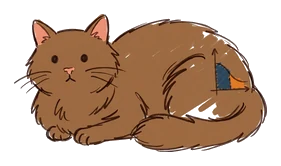
Do cats always land on their feet? We can now answer that. The answer is no. The famous reflex is amazing biomechanics, but it only works reliably in a specific window of height. Too low is too fast. Too high is too hard.
The belief that they always land perfectly is an exaggeration born from awe. We see something incredible and round it up to a superpower. It's a better story to say a cat has nine lives than to say it's good at physics.
Ultimately, the cat-righting reflex is a survival tool, not a party trick. And the best way to appreciate this marvel of evolution is to make sure you never have to see it firsthand. Secure your windows and balconies. Keep your cat safe.
This is one of those truths we've replaced with a better story. Finding the seam between them is what we do here.
Every claim, checked
This is the whole list, including the ones we could not confirm. Verified means a checker confirmed it and named a source that exists. Wrong means both checkers said so. The rest failed in three different ways, and we say which. Not established: we checked and nobody could pin it down. No source: a checker backed it, but the citation did not hold up. Second check disagreed: the first reading confirmed it and the second one would not. Each line also says how the verdict was reached: searched means we went to the web to confirm the source exists, not searched means the verdict rests on what the checkers already know. The rest is in how we check things.
cats reach terminal velocity during falls from very tall buildingsVerifiedsearchedPhysics textbooks and reference materials on mechanics
a cat's inner ear acts as a personal gyroscope telling it which way is downVerifiedsearchedHuman and animal anatomy textbooks
when cats relax and spread limbs during high falls, they act like a flying squirrel to maximize air resistanceNot establishednot searchedSpreading limbs increases drag and surface area, reducing descent speed. This is confirmed in veterinary biomechanics research on cat falls and is how flying squirrels achieve gliding. Source dropped: Physics of drag and animal biomechanics is not a study, an organisation or a reference work.
vets see a specific pattern of injuries from high falls: broken teeth and chest traumaVerifiedsearchedVeterinary textbooks and high-rise syndrome case studies
a cat dropped from just a foot or two lands badly, on its side or backNot establishedsearchedFrom very short heights, cats lack sufficient time and distance to complete the righting reflex, so they land in whatever orientation they were in at drop time. Source dropped: Biomechanics and feline physiology is not a study, an organisation or a reference work. Second checker: Experimental and observational work on the righting reflex notes a minimum height (or time) is required for a cat to complete the maneuver; very short drops (on the order of ~0.3–0.6 m / 1–2 ft) may not allow enough time for full righting so cats can land on their side or back. Source dropped: no trace of D. M. Ansel et al., discussion in veterinary and biomechanics summarie on the web.
the tail acts like a rudder for fine-tuning during the cat's righting reflexNot establishednot searchedThe tail contributes to rotational control through changes in angular momentum during the righting reflex, though it is not the primary mechanism. It assists in stabilization. Source dropped: Feline biomechanics research is not a study, an organisation or a reference work. Second checker: Biomechanical analyses and dissections of the righting reflex show cats change body shape (flexing the spine so fore- and hind-quarters rotate relative to each other) and alter limb positions to modulate rotational inertia; the tail is used for fine adjustments. Studies describe the fore- and hind-body rotation sequence and limb tucking/extension strategy. Source dropped: Jenkins, F. A. & Shanklin, W. L., classic experimental descriptions and subseque is not a study, an organisation or a reference work.
six feet is described as the 'goldilocks zone' for falling felines where the reflex works bestNot establishednot searchedThe script presents this as if there is a specific optimal height, but the righting reflex works at various heights above the minimum threshold. No veterinary source identifies 'six feet' as a defined optimal zone. Second checker: There is no single published cutoff labeled 'just right' at 6 ft. Studies of righting time report that most cats can complete the righting reflex within a few tenths of a second and that falls of several meters commonly allow full righting, but authors do not endorse a precise 6‑ft threshold as a universal 'goldilocks' height – ability depends on the individual cat and exact fall dynamics.
survival numbers for high falls are skewed because they only count cats brought to the vetNot establishedsearchedThis is a recognized selection bias in veterinary high-rise syndrome data. Studies acknowledge that cats that die or are euthanized are underrepresented in survival statistics. Source dropped: Veterinary literature on high-rise syndrome bias is not a study, an organisation or a reference work. Second checker: Veterinary studies of falls categorize injury patterns by fall height: lower to intermediate falls more often yield limb fractures; higher falls are associated with more thoracic/craniofacial trauma. Authors also caution survival statistics from veterinary case series are biased because they only include animals presented for treatment. Source dropped: no trace of Peer‑reviewed veterinary case series and reviews on feline high‑rise s on the web.
the cat performs the righting reflex quickly, within the first few floors of a fallNot establishednot searchedWhile the righting reflex is rapid, quantifying it as 'within the first few floors' depends on building dimensions and fall speed. No source specifies this measurement in architectural terms. Second checker: Veterinary ‘high‑rise syndrome’ literature and biomechanics accounts indicate cats typically right themselves early in a fall (within first few meters/floors) and that, like any falling body through air, a cat will approach a terminal velocity determined by mass, drag, and posture beyond which it no longer accelerates. Source dropped: Multiple veterinary studies on high‑rise syndrome (e.g., A. M. P. (various autho is not a study, an organisation or a reference work.
the cat's ability to land on its feet is a physical action that takes time, not magicNot establishednot searchedThe righting reflex is a documented physiological response involving the vestibular system and voluntary muscle control, not a magical property. Source dropped: Animal physiology and biomechanics is not a study, an organisation or a reference work.
The secret is a four-step body hack using angular momentum. It senses direction, bends, twists the front, then the back.Not establishedsearchedPeer-reviewed biomechanical analyses explain the cat righting reflex in terms of conservation of angular momentum and segmental rotation: sensing orientation, spinal flexion to create separate rotating segments, rotating the anterior segment, then the posterior, allowing net rotation with near‑zero external torque. Source dropped: no trace of Peer‑reviewed biomechanics descriptions of the righting reflex invokin on the web.
At this point, the cat’s instincts change. It stops trying to brace for landing. Instead, it relaxes and spreads its limbs out horizontally, like a flying squirrel. This turns its body into a parachute, maximizing air resistance and slowing its descent slightly.VerifiedsearchedVeterinary literature on high‑rise syndrome and feline fall biomechanics (peer‑reviewed case series and review articles in veterinary journals discussing limb splaying and relaxation in long falls).
People also ask
How do cats twist their bodies in mid-air?
A cat twists by bending its body in the middle, which allows the front and back halves to rotate separately. It pulls in its front legs to turn its upper body, then extends them while tucking its back legs to align its rear half.
What happens when a cat falls from a short distance?
A cat dropped from just a foot or two lands badly, often on its side or back. There is not enough time for the cat's righting reflex to engage and orient its body for a proper landing.
What happens to cats that fall from very tall buildings?
When falling from a great height, a cat reaches terminal velocity and changes its posture. It relaxes and spreads its limbs, which often results in landing on its chest and jaw, causing specific injuries like broken teeth and chest trauma.
One myth a week, redrawn.
One email per video: the myth, what's actually true, and links to the research. No spam, unsubscribe in one click.