Myth, checked
Organic Farms Spray Pesticides Too. Copper Sulfate Is One.
Organic farmers use things like copper sulfate or spinosad. In the 1920s Europe, biodynamic farming was the vision of one man: Rudolf Steiner.
The Promise in Your Shopping Cart
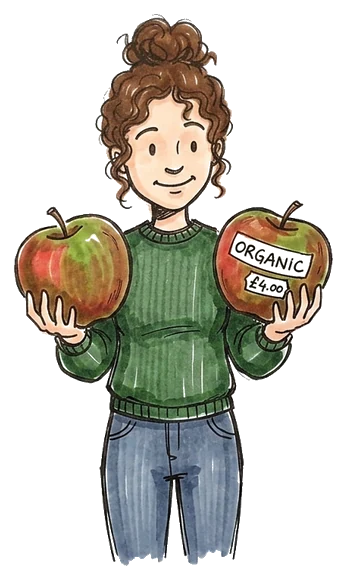
Myth or fact: is organic food really healthier? You see the label everywhere, and it feels like a simple promise of something better, safer, and cleaner.
You’re in the supermarket. In one hand, a regular apple. In the other, an organic one that costs twice as much. The choice feels like it matters.
That label feels like a guarantee. But what if it isn't? To understand what 'organic' really means, we have to follow it backwards, all the way to patient zero.
Today, the first thing you notice about organic food is the price. Your hand hovers over the organic tomatoes, and the numbers are jarring. Why?
Organic farms have smaller yields and need more manual labor. Getting certified is a long, expensive process. All these costs for the farmer add up.
That extra cost pays for a specific farming method. A real cost for a real process. But is that process delivering a healthier product?
The Pesticide Myth
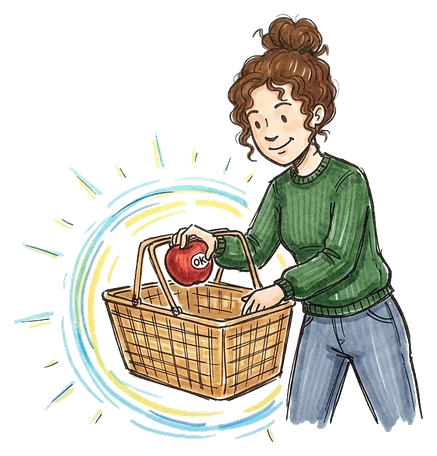
Go back to the 2010s, and a shopper like our young woman had one simple belief about organic food: it's free from pesticides. She bought it thinking she was getting a pure, clean food, untouched by chemicals.
This idea of a perfect, untouched apple is powerful. You imagine it growing in a pristine field, safe from any kind of spray. This is the image we pay for.
The truth is, organic farming uses pesticides. It’s a foundational misunderstanding. The rules don't ban pesticides; they ban most *synthetic* pesticides.
Organic farmers use things like copper sulfate or spinosad. They're natural, but still pesticides. 'Natural' isn't 'harmless'.
The Seal of Approval
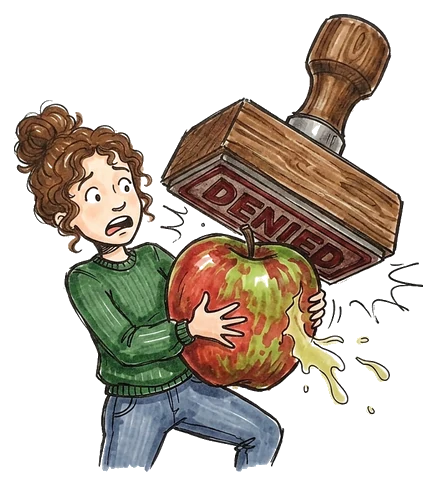
Travel back with our young woman to the year 2002. This was a critical moment. The USDA rolled out national standards, and suddenly the 'organic' apple in her hand had a legal definition.
This was a huge deal. It meant that for the first time, a farm in California and a farm in Maine had to follow the same rules to earn that green and white seal. It created a single, unified market.
Before this, it was the wild west. Anyone could slap the word 'organic' on a label with no real oversight. The seal created a national rulebook, a strict checklist of practices for farmers to follow everywhere.
But look at what the rulebook guarantees: crop rotation, no synthetic fertilizers, animal welfare standards. It never mentions 'healthier' or 'more nutritious'.
When Organic Went Corporate
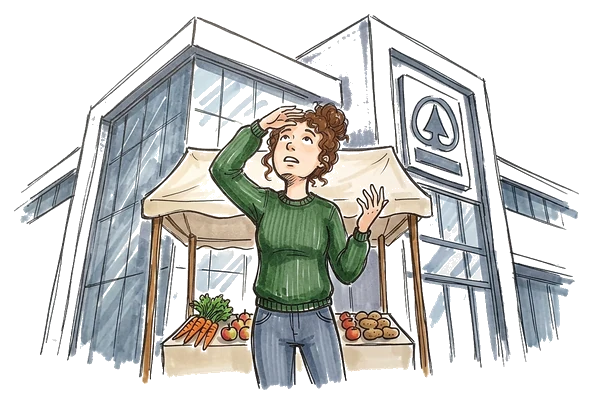
Jump back with our young woman to the 1990s, when big business discovered organic. That niche product from the farmer's market starts appearing on supermarket shelves, right next to regular brands.
Suddenly you could find organic cereals, organic snack foods, even organic frozen dinners. The movement went mainstream, and in the process, it was transformed. It became a brand, packaged and marketed on a national scale.
It was no longer just about farming methods. For you, the shopper, it became about identity. Buying organic became a way to signal your values, your health-consciousness.
A Counterculture Choice
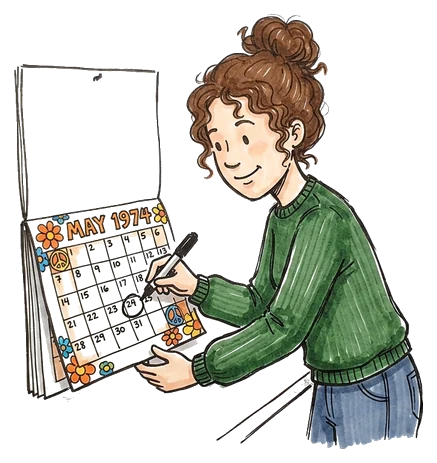
Rewind further, and our young woman lands in the 1970s. Here, 'organic' has a completely different feel. It's the era of counterculture, communes, and the back-to-the-land movement, a world away from the supermarket.
For these pioneers, organic wasn't about a supermarket label you could buy. It was a philosophy you lived. It meant rejecting industrial agriculture, getting your hands dirty, and trying to live in harmony with the earth.
It was a political statement as much as a dietary one. Every carrot you grew was a vote against corporations and a vote for small-scale, local living. This was about changing the system, not just your lunch.
Health benefits weren't studied. They were assumed to be a consequence of a better life. It felt true, so it was.
The Man Who Planted a Word
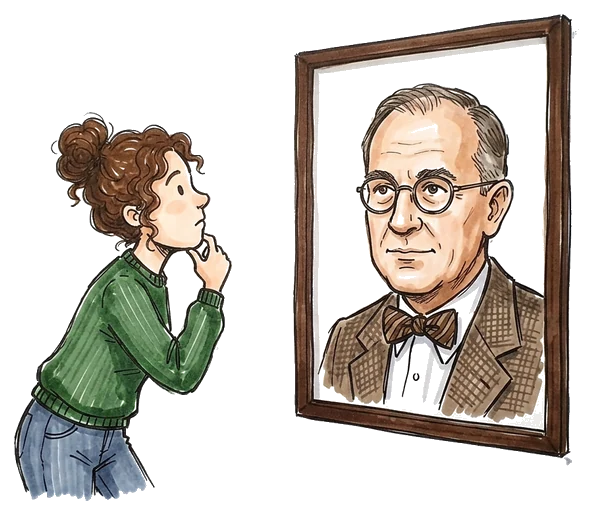
If our young woman goes back to the 1940s, she won't find an organic section. Instead, she finds the man who popularized the word in America: J.I. Rodale. His magazine, 'Organic Farming', launched in 1942.
He was a firebrand, a zealous convert, convinced that the way America was farming–with new synthetic pesticides and fertilizers developed for war–was a terrible, toxic mistake. His magazine became the bible of the early movement.
For Rodale, 'organic' was about soil health. Feed the soil, and the soil grows healthy plants. It's a beautiful, simple idea about a virtuous cycle from the ground up.
The Spiritual Farm
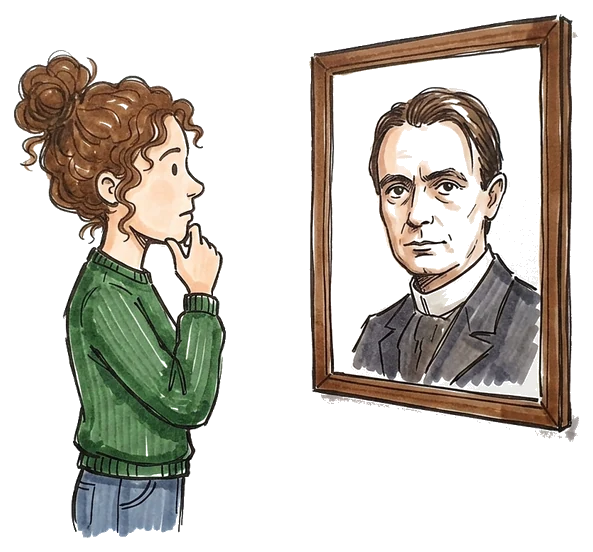
Rodale's ideas didn't appear from nowhere. Our young woman goes back further, to 1920s Europe, and finds the strange world of biodynamic farming. This was the vision of one man: Rudolf Steiner.
Steiner saw the farm not as a factory, but as a single, spiritual organism. He believed it was influenced by the cosmic rhythms of the moon, the sun, and the distant stars. It was a deeply mystical, almost magical vision of agriculture.
His methods involved burying cow horns stuffed with manure to channel cosmic forces. It was less science, more cosmology.
Patient Zero: The Soil Scientist
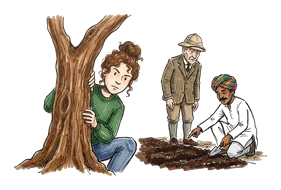
Our young woman arrives at the source in the early 1900s. She's in India, watching a British botanist, Sir Albert Howard, observe local farmers. This is Patient Zero.
Howard wasn't a mystic. He was a scientist, sent to 'improve' Indian agriculture. Instead, he learned from it. He saw farming that wasted nothing and produced healthy crops without chemicals.
He called it the 'Law of Return': the whole farm as one organism, where one part's waste is another's food. This is the origin. 'Organic' meant the farm functions *like* an organism. A huge shift from the label we see today, right?
How the Story Changed
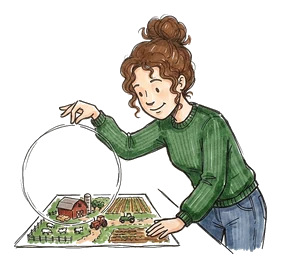
Our young woman's journey reveals how the story changed. It started with a brilliant, holistic idea about soil health and self-sustaining systems. A farm as a complete circle.
That idea was picked up by idealists, who turned it into a philosophy against industrialization. A moral choice.
Then marketers got ahold of it. They simplified the philosophy into a simple promise: 'no chemicals'. And finally, governments standardized that promise into a label.
The label isn't a lie. It's just the last, shortest chapter of a much longer, more interesting book. It guarantees a process, not a result. The health benefits are debated, but the environmental ones can be significant.
So you aren't buying a health shield. You're voting with your wallet for a certain kind of agriculture. This is the kind of story that's quietly wrong everywhere, and finding the truth is what we do here.
Every claim, checked
This is the whole list, including the ones we could not confirm. Verified means a checker confirmed it and named a source that exists. Wrong means both checkers said so. The rest failed in three different ways, and we say which. Not established: we checked and nobody could pin it down. No source: a checker backed it, but the citation did not hold up. Second check disagreed: the first reading confirmed it and the second one would not. Each line also says how the verdict was reached: searched means we went to the web to confirm the source exists, not searched means the verdict rests on what the checkers already know. The rest is in how we check things.
The USDA rolled out national standards for organic food in the year 2002.Not establishednot searchedThe USDA's National Organic Program standards were finalized and took effect on October 21, 2002, but the rule-making process began in the 1990s. The claim is technically correct for the effective date, but the script's framing of '2002' as when standards were 'rolled out' is accurate. Source dropped: USDA National Organic Program is not a study, an organisation or a reference work. Second checker: The USDA implemented the National Organic Program (NOP) regulations in 2002, establishing national standards and a certification process for organic products in the United States. Source dropped: USDA Agricultural Marketing Service, National Organic Program history (NOP regul is not a study, an organisation or a reference work.
J.I. Rodale's magazine 'Organic Farming' launched in 1942.Not establishedsearchedJ.I. Rodale founded 'Organic Gardening and Farming' magazine, which first published in 1942, but the magazine was initially called 'Organic Gardening' when it launched, not 'Organic Farming'. Second checker: J.I. Rodale founded a magazine called Organic Farming and Gardening (later Organic Gardening) in 1942, which popularized organic agriculture in the U.S. Source dropped: no trace of J.I. Rodale Institute and historical records on the web.
The rules don't ban pesticides; they ban most synthetic pesticides.Not establishednot searchedThe USDA National Organic Program explicitly prohibits synthetic pesticides but allows approved natural pesticides including copper sulfate and spinosad. Source dropped: USDA National Organic Program Standards is not a study, an organisation or a reference work. Second checker: USDA organic rules allow the use of certain pesticides (generally those on the National List); they generally prohibit most synthetic substances while permitting many natural substances; some synthetic substances are allowed under specific circumstances. Source dropped: USDA National Organic Program, Code of Federal Regulations (7 CFR part 205) and is not a study, an organisation or a reference work.
Organic farmers use things like copper sulfate or spinosad.VerifiedsearchedUSDA NOP National List (7 CFR 205) and Organic Materials Review Institute (OMRI) listings; e.g., USDA NOP and OMRI documentation on allowed substances (copper compounds, spinosad)
In the 1920s Europe, biodynamic farming was the vision of one man: Rudolf Steiner.VerifiedsearchedRudolf Steiner, Agriculture Course (1924)
In the early 1900s, Sir Albert Howard was a British botanist observing local farmers in India.Not establishednot searchedAlbert Howard was indeed a British botanist and agricultural scientist who worked in India from 1905 to 1931, where he studied traditional farming methods and developed his organic farming philosophy. Source dropped: Sir Albert Howard biography and Organic Farming historical records is not a study, an organisation or a reference work.
Organic food costs twice as much.Not establishednot searchedWhile organic food is generally more expensive than conventional food, the specific claim that it costs 'twice as much' varies by product, location, and time period. No single figure supports this as a universal statement. Second checker: The claim is presented as a general rule that organic apples (or organic food) cost twice as much as conventional. Price premiums for organic products vary by product, retailer and time; some items have near-100% premiums in some markets, others much less. No authoritative source states a general rule that organic apples or organic food "cost twice as much" across the board.
An organic apple costs twice as much as a regular apple.Not establishednot searchedOrganic produce typically costs 20-100% more than conventional produce depending on the product and market, but a universal 'twice as much' figure is not supported by consistent data.
For Rodale, 'organic' was about soil health, with the idea 'Feed the soil, and the soil grows healthy plants.'VerifiedsearchedJ.I. Rodale's publications and the Rodale Institute
Albert Howard called it the 'Law of Return': the whole farm as one organism, where one part's waste is another's food.VerifiedsearchedSir Albert Howard, An Agricultural Testament (1940)
Steiner believed the farm was influenced by the cosmic rhythms of the moon, the sun, and the distant stars.VerifiedsearchedRudolf Steiner, Agriculture Course (1924)
Organic farms have smaller yields and need more manual labor.VerifiedsearchedSeufert et al., "Comparing the yields of organic and conventional agriculture" Nature 2012; Ponisio et al., "Diversification practices reduce organic-to-conventional yield gap" Proc. R. Soc. B 2015; Smith et al., USDA/ERS and FAO assessments (reports)
People also ask
Does organic food have pesticides?
Yes, organic farming can use pesticides. Farmers are permitted to use certain naturally derived pesticides, such as copper sulfate or spinosad.
Why is organic food more expensive?
Organic food costs more because the farming methods result in smaller yields and require more manual labor. Additionally, the certification process itself is a long and expensive undertaking for farmers.
What does the USDA organic seal guarantee?
The USDA organic seal guarantees that specific farming methods were used. These rules cover practices like crop rotation and the prohibition of synthetic fertilizers, but they do not include claims about the food being healthier or more nutritious.
Where did the idea of 'organic' farming come from?
The original concept of organic farming came from scientist Sir Albert Howard, who observed traditional farming in India. He described the farm as a single organism where waste is returned to the soil, creating a self-sustaining system.
One myth a week, redrawn.
One email per video: the myth, what's actually true, and links to the research. No spam, unsubscribe in one click.