Myth, checked
Fleming Found Penicillin in 1928. It Took 16 Years to Work.
The story of penicillin starts in 1928, with a bacteriologist named Alexander Fleming. A patch of mold, Penicillium notatum, is growing. And all around it, the bacteria he was studying have died.
Patient File: The Miracle Cure
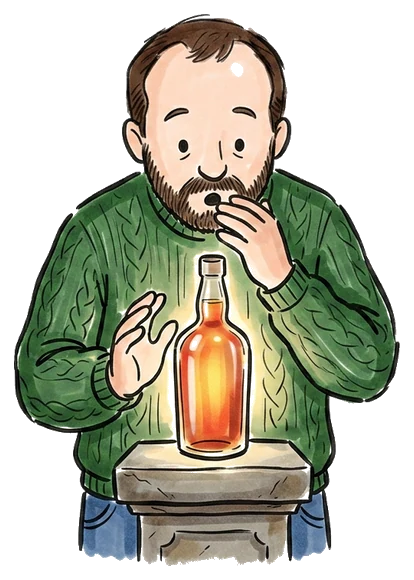
Myth or Fact: A lucky accident gave us penicillin? The story is famous. A messy scientist, a stray bit of mold, and suddenly, a miracle cure that changed the world overnight. We're putting that story on the examination table.
On initial presentation, the patient appears healthy. The belief in penicillin's instant success is everywhere. A perfect story. Maybe a little too perfect.
Patient History
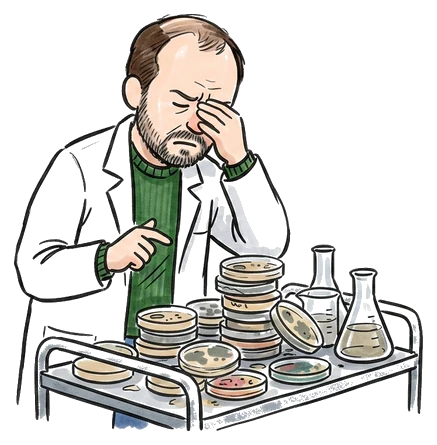
Our examination begins with the patient's history. The story of penicillin starts in 1928, with a bacteriologist named Alexander Fleming. He returns from vacation to find his lab in its usual state: a mess.
In one of those dishes, something is odd. A patch of mold, Penicillium notatum, is growing. And all around it, the bacteria he was studying have died. The mold has created a clear, bacteria-free zone. A tiny circle of death.
Fleming isolates the mold. He finds it produces a substance that kills many common bacteria. In a lab dish, it’s a powerful killer. This is the moment everyone remembers.
First Finding: A Failed Cure
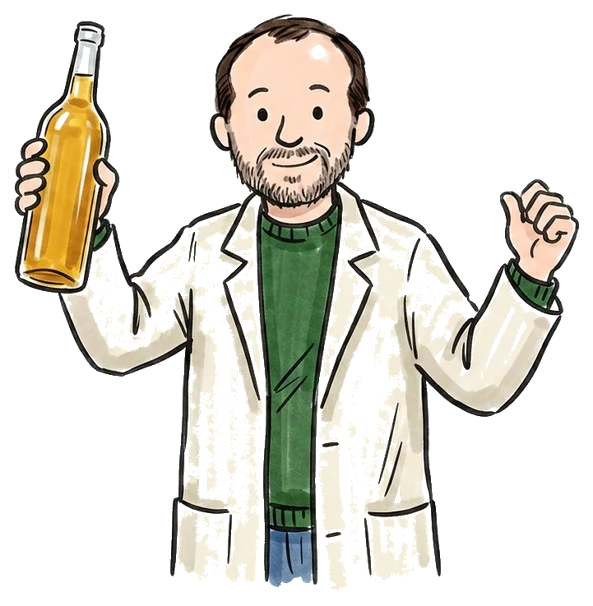
The penicillin story gives us a hero: a middle-aged man, the scientist Alexander Fleming, who supposedly found a miracle cure in 1928. On examination, our first finding is that this 'cure' was a complete failure. Fleming himself couldn't make it work.
The tissue tells a different story. Fleming's 'mould juice' was incredibly unstable. He couldn't purify it, he couldn't produce more than a tiny amount, and it lost its power within hours. It was a chemical ghost.
After trying and failing to make it work, Fleming published his observations in 1929. Then he gave up. He moved on. For ten years, penicillin was a forgotten footnote.
Second Finding: The Oxford Team
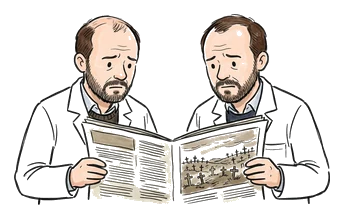
The penicillin story seems to end with its discovery, but the drug sat forgotten for a decade. Then, a pair of middle-aged men, the scientists Howard Florey and Ernst Chain, picked up the trail. The world was at war, and a real cure was desperate.
Our examination now turns to a lab at Oxford University. This team, led by Howard Florey and Ernst Chain, were hunting for natural antibacterial agents. They were professional, methodical, and funded to find something that worked.
Chain stumbled upon Fleming's forgotten paper. The idea of a mold that killed bacteria seemed like a long shot. But they were systematic, and tried to re-create it.
Third Finding: The Grind
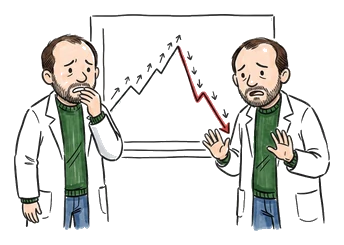
To turn penicillin into medicine, two middle-aged men, scientists Howard Florey and Ernst Chain, faced an industrial nightmare. Our third finding on examination shows the obstacles. The mold itself was temperamental and unstable. Extracting the active compound was incredibly difficult. They had to improvise everything, growing it in hospital bedpans.
And extracting the actual penicillin from the moldy broth was even harder. It was a huge, complex industrial process, just to get a tiny pinch of impure brown powder. The yield was heartbreakingly small.
In 1941, they tested it on a person. He began to recover. A miracle. Then, they ran out. The infection returned, and he died.
The drug worked. But they couldn't make it fast enough. With Britain being bombed nightly in the Blitz, large-scale production was impossible. So Florey made a secret trip. A desperate gamble.
Fourth Finding: The Scale-Up
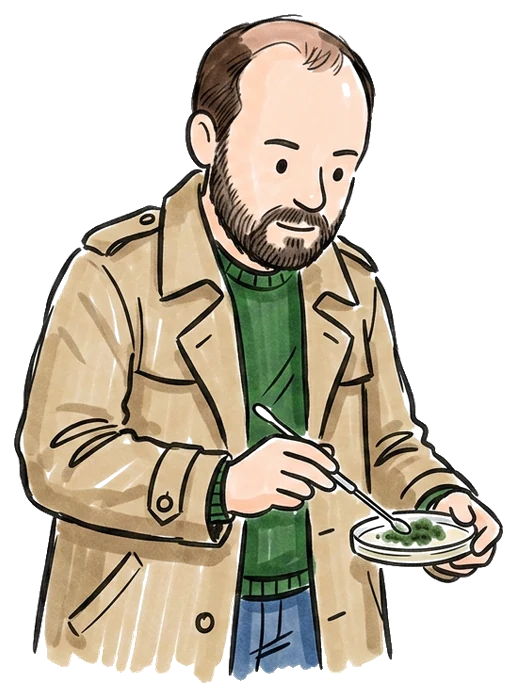
With the new drug penicillin still impossible to mass-produce, one middle-aged man, the scientist Howard Florey, took a huge gamble.
Florey convinced the US government and pharmaceutical companies like Pfizer to take on the challenge. It became a national priority. Scientists across the country joined a massive, coordinated effort to solve the production problem once and for all.
They even found a better mold. The most productive strain wasn't from Fleming's lab. It was found on a moldy cantaloupe melon from a market in Peoria, Illinois. This 'Moldy Mary' strain produced hundreds of times more penicillin.
With American industrial power, they developed deep-tank fermentation, turning the lab curiosity into a factory product. By D-Day in 1944, there was enough penicillin to treat every single Allied soldier who needed it.
Cause of Death
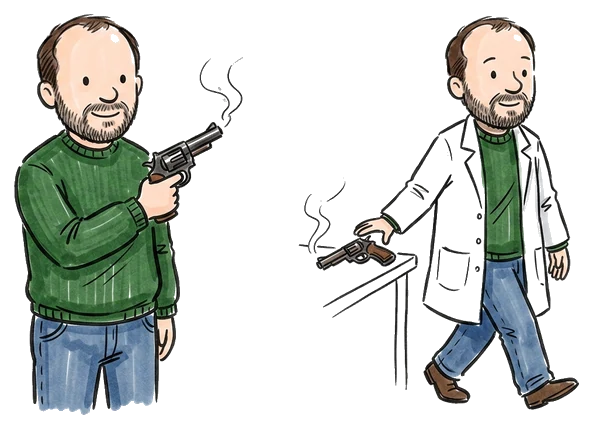
People think penicillin was an instant miracle from one middle-aged man, the lone genius Alexander Fleming. Our examination reveals the cause of death for that myth. He didn't deliver a cure; his discovery was a starting pistol he fired, then walked away from.
The real story is fifteen years of grinding work by huge teams in two countries during a world war. Fleming, Florey, and Chain shared the Nobel Prize. They knew it wasn't one person's discovery. It was a relay race.
This is the kind of story that gets quietly simplified, until the real work disappears. Taking those stories apart is the whole point here. The next time you hear about a lone genius, be suspicious. What other 'lone genius' stories should we examine?
Every claim, checked
This is the whole list, including the ones we could not confirm. Verified means a checker confirmed it and named a source that exists. Wrong means both checkers said so. The rest failed in three different ways, and we say which. Not established: we checked and nobody could pin it down. No source: a checker backed it, but the citation did not hold up. Second check disagreed: the first reading confirmed it and the second one would not. Each line also says how the verdict was reached: searched means we went to the web to confirm the source exists, not searched means the verdict rests on what the checkers already know. The rest is in how we check things.
The story of penicillin starts in 1928, with a bacteriologist named Alexander Fleming.VerifiedsearchedEncyclopaedia Britannica, Fleming, Alexander
A patch of mold, Penicillium notatum, is growing. And all around it, the bacteria he was studying have died.VerifiedsearchedEncyclopaedia Britannica, Fleming, Alexander
After trying and failing to make it work, Fleming published his observations in 1929.VerifiedsearchedFleming, A. (1929). 'On the antibacterial action of cultures of a Penicillium.' British Journal of Experimental Pathology.
For ten years, penicillin was a forgotten footnote.VerifiedsearchedEncyclopaedia Britannica, Penicillin
Howard Florey and Ernst Chain picked up the trail. The world was at war, and a real cure was desperate.VerifiedsearchedEncyclopaedia Britannica, Penicillin
In 1941, they tested it on a person. He began to recover. A miracle. Then, they ran out. The infection returned, and he died.VerifiedsearchedEncyclopaedia Britannica, Penicillin
Howard Florey took a huge gamble. He saved the project by taking it to America, smuggling live spores in his coat.WrongsearchedEncyclopaedia Britannica, Penicillin; Ligon, B.L. (2004). 'Penicillin: Its Discovery and Early Development.' Journal of Applied Microbiology.
The most productive strain wasn't from Fleming's lab. It was found on a moldy cantaloupe melon from a market in Peoria, Illinois.VerifiedsearchedEncyclopaedia Britannica, Penicillin
By D-Day in 1944, there was enough penicillin to treat every single Allied soldier who needed it.VerifiedsearchedEncyclopaedia Britannica, Penicillin
Fleming, Florey, and Chain shared the Nobel Prize.VerifiedsearchedEncyclopaedia Britannica, Nobel Prize
Fleming isolates the mold. He finds it produces a substance that kills many common bacteria. In a lab dish, it’s a powerful killer.VerifiedsearchedAlexander Fleming, "On the Antibacterial Action of Cultures of Penicillium," British Journal of Experimental Pathology (1929)
This 'cure' was a complete failure. Fleming himself couldn't make it work.Not establishedsearchedAlexander Fleming, "On the Antibacterial Action of Cultures of Penicillium," British Journal of Experimental Pathology (1929); NobelPrize.org biography of Alexander Fleming (1945)
People also ask
What did Alexander Fleming actually discover?
Alexander Fleming discovered that a mold called Penicillium notatum produced a substance that could kill bacteria in a lab dish. While a powerful killer in a petri dish, he was unable to purify it or create a stable medicine from it.
If Fleming gave up, who made penicillin work?
A team of scientists at Oxford University made penicillin a viable drug. Led by Howard Florey and Ernst Chain, they picked up Fleming's research a decade later and figured out how to purify and produce it.
Was the first human test of penicillin a success?
The first human test in 1941 was both a success and a failure. The drug proved effective and the patient began to recover, but the small supply ran out and the patient relapsed and died.
Where did the best strain of penicillin come from?
The most productive strain of penicillin did not come from a lab. It was found on a moldy cantaloupe melon from a market in Peoria, Illinois, and it produced hundreds of times more of the drug than the original.
One myth a week, redrawn.
One email per video: the myth, what's actually true, and links to the research. No spam, unsubscribe in one click.