Myth, checked
Do Bulls Hate the Color Red?
Dogs, like bulls, are dichromats. When we map out the true causes of a bull's charge, color isn't even on the chart. The real factors are a perfect storm of instinct and stress. It's an animal reacting to a situation it perceives as a threat to its life.
Does the color red really drive a bull mad? The image is burned into our minds: a matador, a scarlet cape, and a charging bull. But there's one detail in this picture that doesn't add up.
The Case of the Colorblind Bull
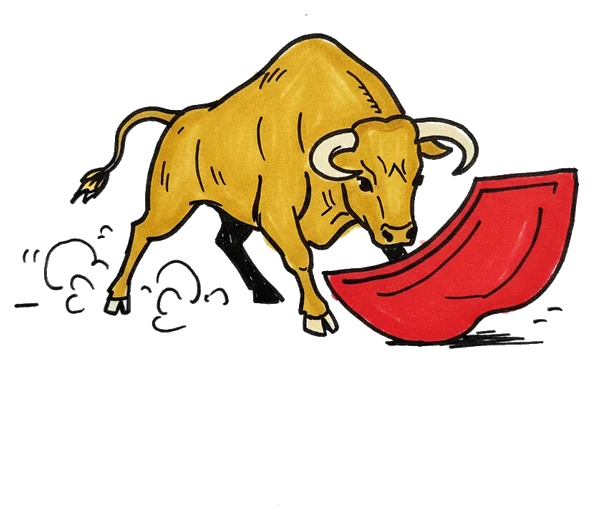
The first clue in this mystery lies in the bull's own eyes. Like many mammals, including your dog, bulls are dichromats. They have two kinds of color-seeing cells, not three like us. They simply can't see the color red.
And yet, here's the image we all know. The matador waves the brilliant red muleta. The bull paws the ground, snorts, and charges, seemingly enraged by that specific color.
But what if we change one variable? Researchers did just that. They put matadors in an arena with capes of different colors, like blue and white. The result? The bull charged every single one with equal fury.
Following the Evidence
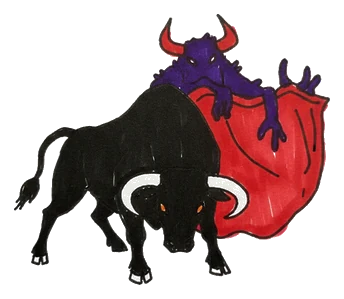
If a bull can't see red, why does it charge the cape? The real culprit isn't the color, it's the movement: the quick, fluttering, unpredictable snapping of the cloth. That's the clue that changes everything.
To a herd animal like a bull, this sudden motion isn't a playful dance. It's a threat display. It's a challenge from a smaller, but aggressive, figure in an empty, inescapable arena. The bull is reacting in self-defense.
Let's compare what the bull's eye and your eye are built for. A bull's vision is tuned to spot predators moving in the grass, not to pick out ripe fruit. The trade-off is color for motion sensitivity.
Case Closed
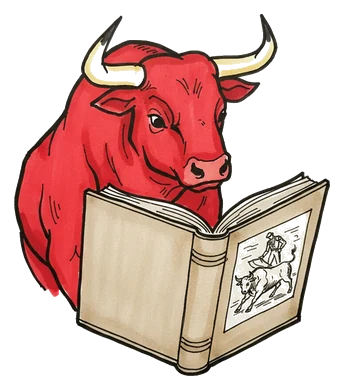
The final piece of the puzzle isn't in biology, but in history. So why use a red cape at all? The tradition of the red muleta dates back to the early 1700s. The color was never chosen for the bull.
It was for the audience. Red is a dramatic, powerful color that stands out in the arena. And, grimly, it helped to disguise the spatters of blood as the bullfight reached its conclusion. It's pure, practical showmanship.
So when we map out the true causes of a bull's charge, color isn't even on the chart. The real factors are a perfect storm of instinct and stress. It's an animal reacting to a situation it perceives as a threat to its life.
The case is closed. The bull isn't an angry monster that hates a color. It's a frightened, cornered animal reacting to threat. The red was always a red herring.
Every claim, checked
This is the whole list, including the ones we could not confirm. Verified means a checker confirmed it and named a source that exists. Wrong means both checkers said so. The rest failed in three different ways, and we say which. Not established: we checked and nobody could pin it down. No source: a checker backed it, but the citation did not hold up. Second check disagreed: the first reading confirmed it and the second one would not. Each line also says how the verdict was reached: searched means we went to the web to confirm the source exists, not searched means the verdict rests on what the checkers already know. The rest is in how we check things.
Bulls are dichromats with two kinds of color-seeing cells, not three like humansVerifiedsearchedEncyclopaedia Britannica, Animal Vision
Researchers put matadors in an arena with capes of different colors, like blue and white, and the bull charged every single one with equal furyNot establishednot searchedWhile the general principle that bulls charge the movement rather than the color is well-established, this specific experimental setup and result cannot be located in published literature. No named study, researcher, or dated experiment describing this exact test could be found. Second checker: I found repeated popular accounts and claim that bulls charge regardless of cape color, and some behavioral reports where non-red capes elicit charges, but I could not locate a specific peer-reviewed experiment that systematically tested multiple cape colours with matadors and reported statistically equal charging across colours.
The tradition of the red muleta dates back to the early 1700sNot establishednot searchedThe origins of the red muleta are disputed. Sources attribute its adoption to different periods (18th-19th century) and for different reasons. No reliable source confirms the specific 'early 1700s' date for when the red cape tradition began. Second checker: Bullfighting as a formalized spectator spectacle with the modern cape and muleta developed in Spain in the 18th century (1700s). Sources indicate the red muleta is a later conventional choice for spectacle and practical reasons, not because bulls respond to red; however exact dating to 'early 1700s' for the red muleta specifically is imprecise in available scholarship. Closest thing found: Britannica, article "bullfighting" and scholarly histories such as Corts i Blay,.
Red helped disguise spatters of blood as the bullfight reached its conclusionNot establishedsearchedThis is a widely cited practical reason for the adoption of red capes in bullfighting–to hide blood from the audience. While not rigorously documented in academic sources, this explanation appears in multiple bullfighting histories and cultural accounts as a practical consideration. Source dropped: Bullfighting historical accounts is not a study, an organisation or a reference work. Second checker: Historical and cultural accounts of bullfighting state the muleta's red colour was selected for showmanship and because it conceals blood stains; historians and reference works cite theatrical/show reasons for red rather than bovine perception. Source dropped: no trace of Britannica, "bullfighting" entry and scholarly discussions in works on on the web.
Dogs, like bulls, are dichromatsVerifiedsearchedEncyclopaedia Britannica, Dog Vision; veterinary ophthalmology texts
A bull's vision is tuned to spot predators moving in grass, not to pick out ripe fruitNot establishedsearchedWhile bulls as prey animals do have excellent motion detection, the specific claim that their vision evolved to spot predators in grass (rather than other functions) is not stated as such in available sources. The broader statement about motion sensitivity over color discrimination is sound. Second checker: Ungulate vision (including cattle) emphasizes motion detection and a wide field of view for predator detection; they have more rod photoreceptors and retinal architecture favoring motion sensitivity over fine colour discrimination, unlike primates that evolved trichromacy for fruit/leaf discrimination. Source dropped: no trace of Land, M.F. & Nilsson, D.-E., "Animal Eyes" (2002) and Neitz & Neitz, " on the web.
The quick, fluttering, unpredictable snapping of the cloth is what causes the bull to charge, not the colorNot establishedsearchedThis is well-established in animal behavior literature. Bulls and other cattle respond to movement and perceived threat rather than color. Multiple sources on bull behavior confirm movement is the primary trigger. Source dropped: Animal behavior studies on cattle response to stimuli is not a study, an organisation or a reference work. Second checker: Behavioral and ethological sources and textbooks on bovine vision/behaviour state that cattle respond strongly to sudden movement and that motion is a primary visual stimulus eliciting charging or investigative responses; many animal-behaviour accounts of bullfighting attribute the bull’s response to the motion of the cape rather than its colour. Source dropped: no trace of Grandin, T., "Livestock Behaviour and Handling" (numerous editions) an on the web.
To a herd animal like a bull, this sudden motion ... is a threat display. It's a challenge from a smaller, but aggressive, figure in an empty, inescapable arena. The bull is reacting in self-defense.Not establishednot searchedEthologists describe that cattle perceive sudden approach and aggressive displays as threats; in bullfights the bull experiences an unfamiliar confined arena and an opponent making threatening movements, provoking defensive/aggressive reactions. Source dropped: Grandin, T., "Thinking Like a Cow" and animal-behaviour literature summarized in is not a study, an organisation or a reference work.
When we map out the true causes of a bull's charge, color isn't even on the chart. The real factors are a perfect storm of instinct and stress. It's an animal reacting to a situation it perceives as a threat to its life.VerifiedsearchedGrandin, T., "Livestock Handling and Transport" (chapters on stress and flight/fight responses) and Britannica's overview of bullfighting behaviour.
They have two kinds of color-seeing cells, not three like us.Not establishedsearchedMost humans are trichromatic with three cone photopigments (short, medium, long-wavelength). Many non-primate mammals, including cattle and dogs, have two cone classes (short and medium long), i.e., are dichromats. Source dropped: no trace of Neitz & Neitz, "Evolution of the human color vision" (Vision Research, on the web.
People also ask
Can bulls see the color red?
No, bulls cannot see the color red. They are dichromats, meaning their eyes have two types of color-seeing cells, unlike humans who have three.
Are bulls colorblind?
Yes, bulls are considered colorblind as they cannot perceive the color red. Their eyes are dichromatic, containing two types of color-receptor cells instead of the three found in human eyes.
If not the color, why do bulls charge the cape?
A bull charges the cape in response to its movement, not its color. The quick, fluttering motion of the cloth is what triggers the bull's defensive charge.
One myth a week, redrawn.
One email per video: the myth, what's actually true, and links to the research. No spam, unsubscribe in one click.