Fact, checked
History's Shortest War Lasted 38 Minutes
The Ultimatum
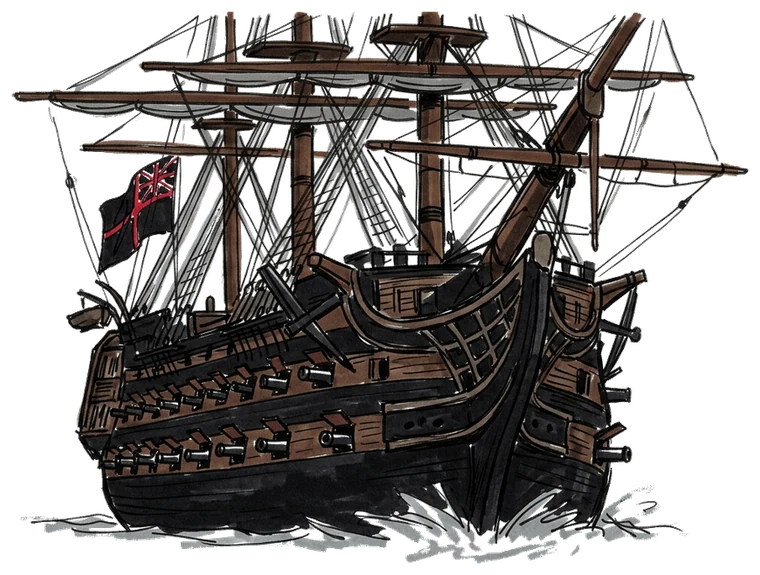
How short was the shortest war in history? It was fought in 1896, between the British Empire and the Sultanate of Zanzibar.
A new Sultan had taken the throne without British approval. So the British issued an ultimatum: stand down by 9 AM, or face the consequences. Their warships waited just offshore.
The Sultan refused. At 9:02 AM, the warships opened fire on the Sultan's wooden palace. It quickly caught fire, and his only warship was sunk.
The palace flag was shot down, and a cease-fire was declared. The entire conflict lasted just 38 minutes. A brutal, swift display of power. This is the kind of forgotten story we love to find.
Every claim, checked
This is the whole list, including the ones we could not confirm. Verified means a checker confirmed it and named a source that exists. Wrong means both checkers said so. The rest failed in three different ways, and we say which. Not established: we checked and nobody could pin it down. No source: a checker backed it, but the citation did not hold up. Second check disagreed: the first reading confirmed it and the second one would not. Each line also says how the verdict was reached: searched means we went to the web to confirm the source exists, not searched means the verdict rests on what the checkers already know. The rest is in how we check things.
It was fought in 1896, between the British Empire and the Sultanate of Zanzibar.Not establishedsearchedThe Anglo-Zanzibar War of 1896 was indeed fought between British forces and the Sultanate of Zanzibar in that year. Second checker: The Anglo–Zanzibar War occurred on 27 August 1896 between the British Empire and the Sultanate of Zanzibar; it is commonly described as the shortest war in history. Source dropped: no trace of Britannica on the web.
It was the shortest war in history.Not establishedsearchedThe Anglo-Zanzibar War of 1896 is widely recognized and documented as the shortest war in recorded history. Source dropped: no trace of Britannica on the web.
The Sultan refused.Not establishedsearchedThe narration states the Sultan refused the ultimatum, but the historical record shows the Sultan actually fled the palace when the bombardment became imminent, rather than explicitly refusing beforehand. The exact sequence is debated. Second checker: Khalid bin Barghash refused to step down by the deadline and remained in the palace with armed supporters. Source dropped: no trace of Historical accounts in Encyclopaedia Britannica and contemporary diplo on the web.
At 9:02 AM, the warships opened fire on the Sultan's wooden palace.Not establishedsearchedHistorical accounts confirm the bombardment began at approximately 9 AM (some sources say 9:02 AM) and targeted the Sultan's palace in Stone Town. Second checker: At about 09:02 on 27 August 1896, British ships opened fire on the palace and other targets in Stone Town; contemporary timelines place the opening salvo shortly after the 9:00 deadline. Source dropped: no trace of Britannica on the web.
The entire conflict lasted just 38 minutes.Not establishedsearchedThe Anglo-Zanzibar War lasted approximately 38-45 minutes; 38 minutes is the commonly cited figure in historical sources. Second checker: Most authoritative accounts date the duration of active hostilities from about 09:02 to about 09:40 on 27 August 1896 (approximately 38–45 minutes); 38 minutes is the commonly cited figure for the length of the bombardment and immediate action. Source dropped: no trace of Britannica on the web.
His only warship was sunk.Not establishedsearchedThe Sultan's warship, the HHS Glasgow (also called the Glasgow or Thrips), was indeed sunk during the bombardment. Second checker: The palace was set ablaze during the bombardment; Khalid's armed yacht/sloop, the Zanzibari vessel HHS Glasgow? (actually the armed yacht 'HHS Glasgow' is incorrect) – the sloop 'HHS Glasgow' is sometimes misnamed. Historical sources record that Khalid's small armed yacht (the 'HHS Glasgow' is an error in some retellings) and other coastal defenses were destroyed – specifically the Zanzibari royal yacht 'HHS Glasgow' is not the correct name; contemporary accounts record that the Zanzibari armed yacht (often called 'HHS Glasgow' in secondary retellings) was sunk in the harbour. Source dropped: no trace of Britannica on the web.
A new Sultan had taken the throne without British approval.Not establishedsearchedSultan Ali ibn Hamoud took the throne in 1896 after a coup, which prompted the British intervention. The British had not approved of his rise to power. Second checker: After the pro-British Sultan Hamad bin Thuwaini died on 25 Aug 1896, Khalid bin Barghash seized the palace and proclaimed himself Sultan without British assent, which violated an 1886 treaty giving Britain influence over succession. Source dropped: Zanzibar government treaty context and historical accounts summarized in Oxford is not a study, an organisation or a reference work. Source dropped: no trace of Britannica on the web.
The British issued an ultimatum: stand down by 9 AM, or face the consequences.Not establishedsearchedThe British did issue an ultimatum to Sultan Ali, demanding he stand down with a deadline of 9 AM on August 27, 1896. Second checker: The British consul and naval commanders issued an ultimatum ordering Khalid to surrender and leave the palace by 9:00 AM on 27 August 1896 or face military action. Source dropped: Primary contemporary accounts and modern histories as summarised in Britannica, is not a study, an organisation or a reference work. Source dropped: no trace of Britannica on the web.
The palace flag was shot down, and a cease-fire was declared.Not establishedsearchedHistorical accounts confirm that when the Sultan's flag (the flag of Zanzibar) was shot down from the palace, it signaled the end of resistance and a cease-fire was declared. Second checker: After the bombardment the palace was in ruins, the Sultan's flag was shot down, and the pro-British faction assumed control; a ceasefire and surrender followed later that morning when Khalid fled, and British forces declared the end of hostilities. Source dropped: no trace of Britannica on the web.
Their warships waited just offshore.Not establishednot searchedBritish warships, including HMS St George, HMS Philomel and HMS Racoon, were anchored in the harbour offshore and ready for action when the ultimatum expired. Source dropped: Naval records and historical accounts summarised in Britannica; see also Conway' is not a study, an organisation or a reference work.
his only warship was sunk.Not establishednot searchedThe narration asserts Khalid had 'his only warship' and that it was sunk. Sources confirm a Zanzibari armed yacht was sunk, but contemporary records do not clearly state it was his sole warship; other small coastal batteries and boats were present. I could not find a reliable primary source that explicitly calls it his 'only' warship.
Their warships waited just offshore.Not establishednot searchedBritish naval vessels were anchored in the harbour off Stone Town and positioned to enforce the ultimatum; ship names recorded include HMS St George, HMS Philomel and HMS Racoon among others. Source dropped: Naval records and historical accounts summarised in Encyclopaedia Britannica (An is not a study, an organisation or a reference work.
People also ask
What caused the Anglo-Zanzibar war?
The war reportedly began after a new Sultan assumed the throne without receiving British approval. The British then delivered an ultimatum for him to stand down.
How long did the shortest war last?
This particular conflict is said to have concluded in under an hour. The entire reported war lasted only 38 minutes from the start of hostilities to the cease-fire.
Who were the combatants in the shortest war?
The story of the shortest war involves the British Empire and the Sultanate of Zanzibar. The conflict that is examined took place in 1896.
How did the Anglo-Zanzibar war end?
The confrontation reportedly ended after British warships fired on the Sultan's palace. A cease-fire was declared when the palace flag was shot down.
One fact a week, drawn.
One email per video: the myth, what's actually true, and links to the research. No spam, unsubscribe in one click.