Fact, checked
A Banana Is a Berry. A Strawberry Is Not.
A true berry develops from one single flower that has one single ovary. A banana grows from a flower with just one ovary.
Which one of these is the real berry? You probably point to the strawberry. It's even in the name. But a botanist would point somewhere else entirely.
The Real Definition
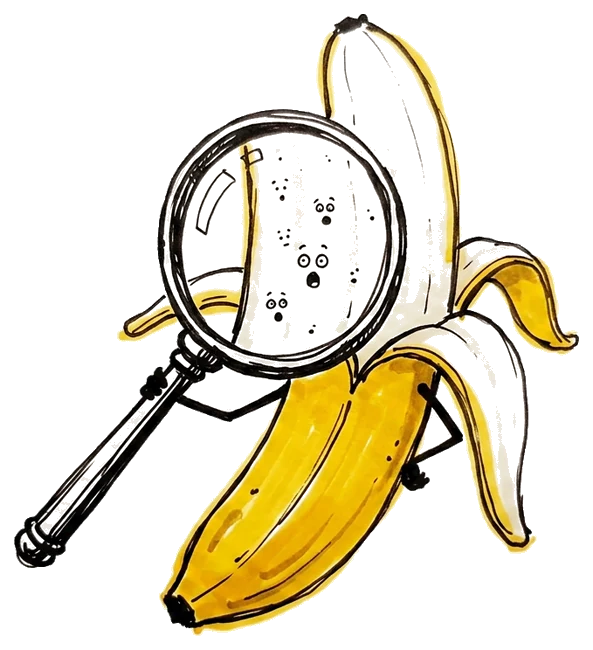
The scientific definition is very specific. A true berry develops from one single flower that has one single ovary. That ovary wall becomes the fleshy part of the fruit, and the seeds are all held on the inside. Simple enough, right?
And a banana fits perfectly. It grows from a flower with just one ovary. Those are its seeds. They're sterile, so we can't grow them, but they are definitely seeds.
But a strawberry? It comes from one flower with hundreds of tiny ovaries. The red flesh we eat grows from the flower's stem tip. And those things we call seeds on the outside? Each one is a separate little fruit, called an achene.
So the fruit family is full of botanical surprises, and names can be misleading. A lot of common knowledge is like that.
Every claim, checked
This is the whole list, including the ones we could not confirm. Verified means a checker confirmed it and named a source that exists. Wrong means both checkers said so. The rest failed in three different ways, and we say which. Not established: we checked and nobody could pin it down. No source: a checker backed it, but the citation did not hold up. Second check disagreed: the first reading confirmed it and the second one would not. Each line also says how the verdict was reached: searched means we went to the web to confirm the source exists, not searched means the verdict rests on what the checkers already know. The rest is in how we check things.
A true berry develops from one single flower that has one single ovary.VerifiedsearchedBritannica, Berry (fruit)
A banana grows from a flower with just one ovary.VerifiedsearchedUniversity of Florida IFAS Extension factsheet on banana (Musa spp.), and botanical descriptions of Musa flowers (e.g., University of Florida/IFAS, 2019)
Those tiny black specks you see in the middle [of a banana] are its seeds.VerifiedsearchedBritannica, Banana
A strawberry comes from one flower with hundreds of tiny ovaries.VerifiedsearchedBritannica, Strawberry
The red flesh we eat [in a strawberry] grows from the flower's stem tip.VerifiedsearchedBritannica, Strawberry
Those things we call seeds on the outside [of a strawberry]? Each one is a separate little fruit, called an achene.VerifiedsearchedBritannica, Achene
That ovary wall becomes the fleshy part of the fruit, and the seeds are all held on the inside.VerifiedsearchedEncyclopaedia Britannica (article "berry", 2024)
A banana fits perfectly.Not establishednot searchedBotanically cultivated bananas (Musa) meet the botanical criteria for a berry: they develop from a single ovary and are fleshy with seeds enclosed in the flesh (even though seeds in many cultivated varieties are reduced). Source dropped: Kew Gardens / Royal Botanic Gardens, Kew - plant glossary and facts about banana is not a study, an organisation or a reference work.
People also ask
What is the true definition of a berry?
A true berry is a fruit that develops from a single flower that contains only one ovary. The wall of that ovary becomes the fleshy part of the fruit we eat, and the seeds are held on the inside.
Does a banana have seeds?
Yes, a banana does have seeds. The tiny black specks you see in the center of the fruit are its seeds, although they are sterile and cannot be planted to grow new ones.
Why isn't a strawberry considered a berry?
A strawberry is not a true berry because it develops from a flower with hundreds of tiny ovaries, not the required single ovary. The red, fleshy part we eat actually grows from the flower's stem tip.
What are the seeds on the outside of a strawberry?
The small things on the outside of a strawberry that we call seeds are not actually seeds. Each one is a separate, complete fruit called an achene.
One fact a week, drawn.
One email per video: the myth, what's actually true, and links to the research. No spam, unsubscribe in one click.